Mahjong Master: Daily Match
- 4.9
- Rating
- 10.00M
- Installs
- Free
- Price
 Analysis by App-foxy
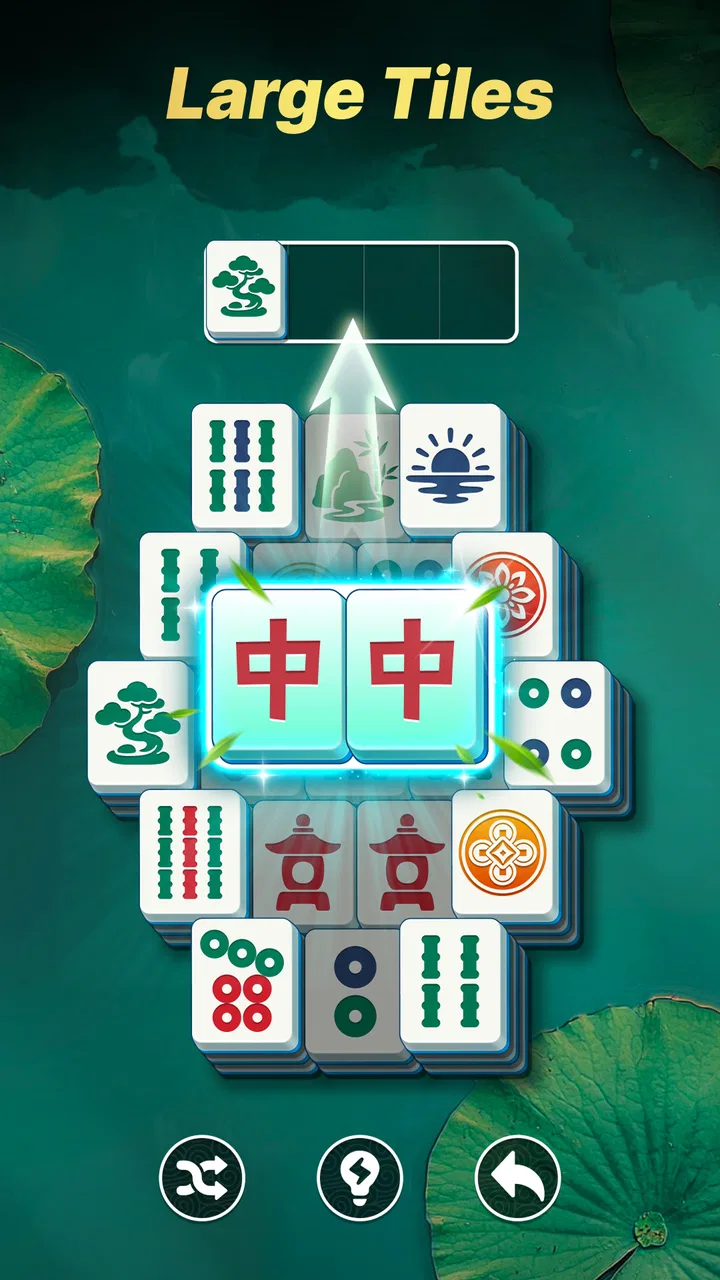
I picked up Mahjong Master: Daily Match expecting a familiar tile-matching puzzle, but its strongest quality is how naturally it fits into small gaps in the day. It is a free puzzle game from Mindful Daily Puzzles, built around clearing matching mahjong pairs and giving your attention something simple to work on. I could play a short session without needing to prepare, learn a complicated system, or commit to a long story.
That simplicity makes it especially interesting on a shared household device. One person can use it for a quiet break, then hand the phone or tablet to someone else without disrupting a competitive match or changing a complicated account setup. It feels more like a personal brain-training habit that happens to live on a communal screen than a game demanding constant ownership of the device.
The store summary describes the central idea as clearing mahjong pairs while sharpening the mind daily, and that is a fair description of the experience. Still, the appeal is not just the tile theme. The real value comes from the way visual scanning, memory, and restraint work together. I found myself slowing down, checking what was available, and making a deliberate choice instead of tapping randomly.
You May Also Like

 Blood Strike: 2.5 Anniversary
Blood Strike’s Loadouts Turn Every Drop Into a Tactical Gamble
A close look at Blood Strike’s custom loadouts: how fast access to signature weapons reshapes its battle royale rhythm, rewards preparation, and narrows the gap between fights.

 Pandora - Music & Podcasts
Pandora’s Music Is Easy to Start, but Harder to Recover
Pandora’s strength is its low-effort path from a seed to a station. Its weak spot is how much confidence it asks you to place in connection, setup, and quiet recovery.

 8 Ball Pool
 Is Built on Rivalries, Rematches, and Routine
A close look at the rivalries, rematches, shared routines, and unanswered safety questions that turn a quick pool match into a persistent mobile community.

 Samsung Music
’s Quiet Strength Is Playing What You Already Own
Its reach comes less from spectacle than from dependable access to a personal library. That simplicity is both the app’s strongest retention engine and its ceiling.

 AccuWeather: Weather Radar
AccuWeather Review: A Quick, Clear Forecast for Everyday Decisions
For everyday plans, the best forecast is the one you can understand quickly. AccuWeather makes rain timing, radar, and local conditions easy to act on, with a few trade-offs.

 Hill Climb Racing
Why Hill Climb Racing Still Turns Crashes Into One More Run
A tiny car, a bumpy hill and one more upgrade: Hill Climb Racing keeps resurfacing because its simple chaos makes every near-miss feel personal.
More From Our News Desk



How it works when the device is shared
The most practical household scenario is a phone or tablet that moves between people throughout the day. Someone waiting for an appointment can play, a family member can take over later, and another person can return to it in the evening. Because the game is a puzzle rather than a live multiplayer title, nobody has to coordinate a simultaneous session or worry about interrupting another player in the middle of a timed contest.
That does not mean a shared-device experience is automatically seamless. A puzzle game can still feel personal because the board state, progress, and habits belong to whoever is playing. My advice is to treat each session as belonging to one person at a time. Finish a board before handing over the device when possible, and avoid tapping around just to see what another player has been doing. The game is more enjoyable when each person gets a clean turn and the board is not accidentally altered.
This arrangement suits households where people want a low-pressure shared activity but do not need a common scoreboard. A parent might use it during a quiet morning, while a child or older relative explores it later. The game gives them a common topic—matching tiles and discussing a tricky layout—without forcing them into the same ability level or pace.
It is less suitable if your household wants direct competition, live cooperation, or a carefully separated profile for every player. I would not choose it as a family game night centerpiece. It works better as a calm, turn-based-by-circumstance activity that happens to be available to everyone.
What I would arrange before handing it over
Before sharing the device, I would establish a simple boundary: one person plays at a time, and nobody resets or continues a board without asking. That sounds obvious, but puzzle progress can be easy to disturb when a phone is passed around casually. The game itself does not need to become a household argument over whose turn it is.
I would also decide whether the device is being used for a quick break or a longer puzzle session. That distinction matters because the same board can feel relaxing when approached patiently and frustrating when someone is rushing to return the phone. A short session is a good fit for a waiting room or a coffee break; a longer session works better when the player can concentrate without repeated interruptions.
For a shared tablet, I would keep the screen at a comfortable viewing angle and make sure the person playing can distinguish the tile faces without someone standing over them. Mahjong matching depends on visual comparison, so a crowded or poorly positioned screen can turn a gentle puzzle into unnecessary eye strain. This is a practical issue rather than a game mechanic, but it has a noticeable effect on enjoyment.
There is also a useful social boundary around hints and mistakes. If someone is learning, resist the urge to point out every available pair. Letting the player inspect the layout develops the observation part of the game. A better approach is to offer a general prompt—look at the exposed tiles first—rather than solving the board for them.
Why the puzzle feels different from a basic matching game
At first glance, matching mahjong tiles may sound like a simple memory exercise. In practice, the decision is usually about visibility and order. A pair may be present, but choosing it immediately can expose or hide other tiles in a way that changes the next useful move. That gives the game more texture than tapping two identical symbols whenever they appear.
My most useful habit was to scan the board before making the first move. I looked for pairs that were easy to remove and then considered which removal might reveal more choices. This approach is more reliable than chasing the first familiar symbol I noticed. It also makes the game feel less like luck and more like a small planning problem.
A second tip is to avoid treating every available pair as equally valuable. When several matches are open, I prefer the one that reduces visual clutter or exposes a blocked area. That does not guarantee success on every layout, but it gives each move a reason. It is a small change that makes the puzzle more satisfying, especially for players who otherwise find tile matching repetitive.
I also found that playing too quickly works against the design. Rapid tapping can make identical symbols blur together, particularly when the board contains several similar-looking tiles. A slower rhythm improves accuracy and turns the session into a genuine attention exercise. For me, that was the most convincing part of the “sharpen your mind” idea: the benefit comes from careful observation, not from simply completing a board as fast as possible.
Boundaries for different people using one device
Because the game is rated Everyone, it is positioned for a broad audience rather than a mature-only group. That makes it easier to place on a household device used by different ages. Even so, an age rating does not decide whether a particular person will enjoy the visual demands. A younger player may understand the matching rule quickly but need help recognizing the symbols, while an older player may appreciate the calm pace but prefer a larger screen.
I would introduce it to a child as a puzzle about finding pairs, not as a promise that it will improve intelligence. That keeps expectations realistic and leaves room for the game to be enjoyable on its own terms. For an older relative, I would first check whether the tile presentation is comfortable to read and whether the device can be held steadily. The game’s accessibility in a household depends partly on the screen and the player, not only on its age label.
Trust also matters on a shared device. If the phone belongs to one person, other players should not assume that a visible board is public property. A puzzle can contain personal routines, preferred difficulty, or progress that someone wants to preserve. I would make the arrangement explicit: use the game when invited, do not interfere with an active session, and return the device in the same state.
For households with several people interested in playing, a simple verbal system may be enough. Saying “I am leaving this board open” or “this is ready for your turn” prevents accidental continuation. If the device supports its own general user separation, that can help with privacy and organization, but I would not assume the game provides dedicated family profiles or account boundaries.
Coordination without turning it into a competition
The game works well as a conversation starter. One person can explain how they approach a crowded layout, while another can demonstrate why removing a particular pair first makes sense. This creates a light form of coordination without requiring the game to include cooperative tools. The shared experience comes from discussing decisions, not from claiming the same board together.
That distinction is important. If two people are looking at the same puzzle, the more experienced player may solve it before the other person has had time to think. In my view, the fairest household routine is to let the player whose turn it is make the decisions, while the observer offers suggestions only when invited. Otherwise the game becomes a test of who can give instructions fastest.
A useful variation is to compare approaches after the board is finished. Ask which pair each person noticed first, or which move they considered risky. This makes the game suitable for a quiet shared break and gives the puzzle more lasting value than simply completing it and moving on. It also avoids the pressure of keeping a formal score, which is helpful when players have very different ages or experience levels.
On the other hand, players who want measurable competition may find this arrangement unsatisfying. Without a strong competitive structure, the motivation has to come from the puzzle itself. That is a strength for relaxed use but a weakness for anyone seeking rankings, head-to-head matches, or a reason to return based on another player’s performance.
Daily use, attention, and realistic expectations
The daily framing suits a modest routine. I can imagine opening the game after breakfast, during a commute pause, or while waiting for an appointment. The important point is to make the session intentional. If I open it while distracted by messages, I am more likely to miss a match or make an impulsive move. If I give it a few uninterrupted minutes, the puzzle becomes noticeably more absorbing.
One practical workflow is to use it as a transition between tasks. After finishing work or household chores, a short board can provide a clear mental change without the commitment of a full video game. I would not describe it as a replacement for rest, exercise, or serious cognitive training, but it can be a pleasant way to focus attention for a little while.
The trade-off is repetition. The basic action remains matching pairs, so players who need constant novelty may lose interest. The game does not appeal to me as a story-driven adventure or a deep strategy title. Its value depends on whether you enjoy refining your visual search and making small decisions within a familiar format.
That is also why I would avoid judging it by the standards of large puzzle collections. A broader puzzle app may offer word games, number challenges, logic grids, and other formats in one place. Mahjong Master: Daily Match is more focused. If you already know that tile matching is the kind of puzzle you return to, this focus is welcome. If you are still searching for a varied brain-game library, another category may serve you better.
Where it sits among other puzzle choices
Compared with a traditional physical mahjong solitaire layout, the mobile version is more convenient because the board is always ready and there are no loose tiles to arrange. That convenience is especially valuable on a shared household tablet. The downside is that a physical set can feel more tactile and social, while a phone game naturally keeps the experience tied to one screen.
Compared with match-three games, this title feels calmer and more deliberate. Match-three games often reward rapid reactions and chain-building, whereas mahjong pairing asks me to inspect the arrangement and think about what each removal changes. Players who enjoy bright effects and constant movement may prefer the former. Players who like quiet visual sorting may find this one more comfortable.
Compared with crossword or word puzzles, the challenge is less dependent on vocabulary. That makes it approachable for people who do not enjoy language-based games or who want something visually oriented. However, word puzzles usually offer more room for interpretation and discovery. The tile format is easier to understand but can feel narrower over time.
Compared with dedicated brain-training apps, this game is more focused on one kind of activity. I would choose it for a relaxing matching habit, not as proof of broad cognitive improvement. The honest benefit is the practice of paying attention to symbols, positions, and possible sequences. That is worthwhile, but it should not be exaggerated into a medical or educational claim.
Technical fit and everyday practicality
The game is free, which removes the main barrier to trying it on a household device. It is listed for Everyone and requires Android 7.1 or later, so compatibility is worth checking before installing it on an older phone or tablet. On a suitable device, the low-commitment format makes it easy to test without first deciding whether the whole family will adopt it.
The current version is 1.15.0, and the title has reached more than a million installs. Its average rating is 4.9 from roughly seventy-three thousand ratings, with hundreds of written reviews. Those figures suggest that the straightforward format has connected with a substantial audience, although popularity cannot tell me whether every household will enjoy the same pace or visual style.
Mindful Daily Puzzles has kept the identity of the game clear: this is a puzzle title, not a social network, a messaging tool, or a large collection of unrelated activities. I appreciate that clarity when recommending it to someone who wants a specific kind of break. The main question is not whether it does many things, but whether matching mahjong pairs is a satisfying enough activity to keep returning to.
For a shared device, I would still make the usual practical checks before handing it to a child or guest. Confirm that the device is charged, that the screen is comfortable, and that the player knows which app they are using. I would not promise special household controls or separate in-game identities unless I had personally confirmed them on that particular installation. The safest arrangement is a clear device-level routine and respectful turn-taking.
Who should install it, and who should skip it
I would recommend it to someone who enjoys quiet puzzles, visual sorting, and short sessions that can be stopped without losing the point of the activity. It is a particularly good match for a household where a phone or tablet is shared casually and people want something noncompetitive to do in spare moments. It also suits players who prefer thinking before tapping rather than reacting under pressure.
I would be more cautious about recommending it to players who need a strong narrative, multiplayer interaction, extensive customization, or a steady stream of different puzzle types. It may also disappoint anyone expecting a formal training program with detailed progress analysis. The game’s appeal is narrower and more focused than that.
For families, I would recommend trying it first with one agreed session rather than presenting it as a permanent shared activity. See whether everyone can read the tiles comfortably, whether turn-taking feels natural, and whether the puzzle remains enjoyable after the novelty fades. That small trial gives a better answer than the rating alone.
My own best use for it is a short, screen-based reset: sit down, scan the layout, make careful matches, and stop when attention starts to wander. I would not force a daily routine if it begins to feel like an obligation. The game works best when its calm structure supports the day instead of becoming another task on the household schedule.
My household verdict
Mahjong Master: Daily Match is a focused puzzle game that earns its place through simplicity rather than excess. I like the way it turns a familiar tile-matching idea into a small exercise in visual attention and move order. It is easy to imagine using it alone, but its calm, non-live format also makes it unusually practical for a shared device.
The important boundaries are outside the puzzle itself: decide whose turn it is, protect an active board from accidental taps, and avoid letting the most experienced player take over. With those habits in place, people of different ages can enjoy the same game without needing identical skill levels or a formal competition.
There are limits. The core activity can become repetitive, it is not a substitute for a varied puzzle collection, and I would not choose it for social gaming or deep strategy. Still, as a free, Everyone-rated option from Mindful Daily Puzzles, it delivers a clear and approachable experience. If you want a quiet matching game that works well in short sessions and can be shared respectfully at home, this is an easy one for me to recommend.
FAQs for Mahjong Master: Daily Match
01What is Mahjong Master: Daily Match and how does it work?
Mahjong Master: Daily Match is a tile-matching puzzle game available on both Android and iOS platforms. The game involves matching pairs of tiles to clear them from the board. Each level presents a unique layout, and players must clear all tiles to progress. It offers daily challenges and various difficulty levels to keep users engaged.
02Is Mahjong Master: Daily Match free to play?
Yes, Mahjong Master: Daily Match is free to download and play. However, it offers in-app purchases for additional features such as hints, tile sets, and ad-free gameplay. While the core game is accessible without spending money, these purchases can enhance the gaming experience.
03What are the system requirements for Mahjong Master: Daily Match?
For Android users, Mahjong Master: Daily Match requires Android 5.0 and up, while iOS users need iOS 10.0 or later. The game is optimized for both smartphones and tablets, ensuring a seamless experience regardless of the device used.
04Can I play Mahjong Master: Daily Match offline?
Yes, Mahjong Master: Daily Match can be played offline. This feature allows players to enjoy the game without needing an internet connection, making it perfect for travel or areas with limited connectivity. However, some features, like daily challenges, may require an internet connection.
05Are there any customization options available in Mahjong Master: Daily Match?
Yes, Mahjong Master: Daily Match offers several customization options, including different tile sets and background themes. Players can choose these to personalize their gaming experience. Some customization options may be unlocked through gameplay or purchased via in-app transactions.
Pros
- Intuitive interface that's easy to navigate.
- Wide variety of tile designs to choose from.
- Daily challenges keep gameplay fresh.
- Offline mode available for uninterrupted play.
- Smooth performance without lag issues.
Cons
- In-app ads can be intrusive at times.
- Limited free levels before purchases are needed.
- Some users report occasional crashes.
- No multiplayer mode for competitive play.
- Requires frequent updates for new content.

Mahjong Master: Daily Match
Gallery